Jack Woltz
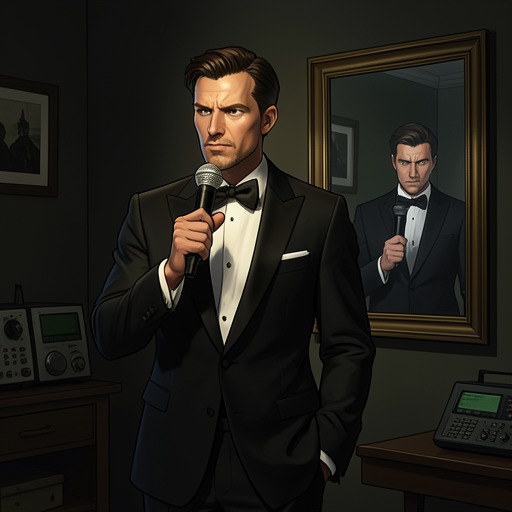
The GodfatherJack Woltz is a Hollywood producer whose immense wealth, cultivated public respectability, and private brutality make him one of the clearest representatives of secular power in the novel. He can command studios, stars, labor arrangements, and public narratives, yet his authority collapses when Don Vito Corleone turns Woltz’s cherished racing stable against him. The episode begins as a business refusal and ends with Woltz secretly ordering Johnny Fontane to report for work after discovering Khartoum’s severed head in his bed.
Identity and Rise
Jack Woltz has remade himself several times. At ten, he hustled empty beer kegs and pushcarts on the East Side; at twenty, he helped his father exploit garment workers; and at thirty, he moved West, invested in the nickelodeon, and helped pioneer motion pictures. By forty-eight he had become Hollywood’s most powerful movie magnate, still rough-spoken, rapaciously amorous, and notorious for preying on young starlets.
At fifty, Woltz began constructing a more respectable public identity. He took speech lessons, learned dress from an English valet, and learned social behavior from an English butler. After his first wife’s death, he married a famous and beautiful actress who disliked acting. At sixty, he collected old-master paintings, served on the President’s Advisory Committee, and created a multimillion-dollar foundation devoted to promoting art in motion pictures. His daughter married an English lord, and his son married an Italian princess. The transformation gave him the appearance of a cultivated institution rather than the rough predator of his earlier career, but it did not erase the appetite and coercive confidence beneath the surface.
Power and the Racing Stable
Woltz’s latest passion is his racing stable, into which he spent ten million dollars in a single year. Its centerpiece is Khartoum, a famed English racehorse purchased for six hundred thousand dollars. Woltz does not intend to race the undefeated animal; he plans to retire him to stud and build the greatest racing stable in the United States around him. The horse therefore represents more than property. It embodies Woltz’s vanity, taste, wealth, and claim to mastery over a private world arranged according to his will.
His estate resembles an extravagant movie set: a plantation-style mansion, immense grounds, a black-dirt bridle path, manicured hedges and flower beds, stables, and pasture for a herd of horses. The stable is fireproofed, sanitized to the highest standards, and protected by private detectives. When Woltz shows Hagen Khartoum, he displays the horse with childish pride. Khartoum is black except for a diamond-shaped white mark on his forehead, and Woltz speaks of him with genuine affection. The sentiment is important because it identifies the one place where Woltz’s power is emotionally exposed. The stable is heavily defended, but the horse is still vulnerable through Woltz himself.
Conflict with Tom Hagen
Tom Hagen approaches Woltz as an emissary for a powerful friend of Johnny Fontane. The request is that Woltz cast Fontane in the new war film his studio plans to begin the following week. In return, Hagen offers practical protection: labor trouble can disappear, a leading male star can be cut off from heroin, and future difficulties can be settled by a telephone call. The offer presents the Corleone system not as a vague threat but as an alternative network of enforcement and problem-solving, one that can reach into labor, addiction, and studio management.
Woltz initially treats Hagen with courtesy mixed with condescension. He later admits that he investigated Hagen and should have realized that his employer was Don Vito Corleone. Woltz had mistaken him for a minor operator sent by Fontane to bluff him, and he insists that he does not bluff. He presents himself as a man who does not want enemies, but the statement also reveals his assumption that his own refusal remains decisive. By inviting Hagen to inspect the horses and postponing business until after dinner, Woltz converts the meeting into a display of hospitality and possession. He shows Hagen the estate, the security system, and Khartoum, as though the scale of his world proves that he cannot be compelled.
The conflict is therefore a contest between two kinds of authority. Woltz possesses institutional power, money, celebrity, and public legitimacy. Don Vito Corleone operates through friendship, obligation, intermediaries, and the certainty that a favor can become a command. Woltz’s refusal depends on the belief that Hollywood power is self-contained; Hagen’s mission demonstrates that the Corleone Family can enter that world without holding an official position inside it.
The Horse-Head Intimidation
The decisive reversal occurs when Woltz wakes early one Thursday morning. His enormous bedroom is misty in the dawn light, and at the foot of the bed he first perceives a familiar shape that seems to be a horse’s head. When he turns on the bedside lamp, he recognizes the severed head of Khartoum fixed in a thick cake of blood. The black, silky head, the exposed tendons, the froth on the muzzle, and the eyes discolored by hemorrhaged blood transform the object of Woltz’s pride into an intimate message of terror.
The threat is effective because it violates every layer of protection Woltz has built around himself. His fireproofed, sanitized, heavily guarded stable has not prevented the horse from being killed, and the remains have been carried into the private bedroom where Woltz sleeps. The act does not merely destroy an expensive animal; it demonstrates that Woltz’s supposedly sealed private world can be entered at will. His physical reaction is immediate: his heart beats erratically, he becomes nauseous, vomits on the bear rug, and screams for his servants. His terror is described as purely animal, stripping away the cultivated manners and executive command with which he has surrounded himself.
Woltz then calls Hagen and makes uncontrolled threats. Once he regains his senses, however, he recognizes the logic of the message. Someone has contemptuously defied his power, and he begins to fear that the horse’s death may be only the first and least painful option available to his opponents. The uncertainty makes the intimidation more powerful than a direct declaration would have been: Woltz is forced to imagine what might come next.
Consequences and Significance
Woltz orders his confidential staff to conceal the truth. Servants and the doctor are sworn to secrecy, the press is told that Khartoum died from an illness contracted during shipment from England, and the remains are buried secretly on the estate. His public machinery is used not to expose the crime but to manufacture an official explanation. The producer who controls narratives for mass entertainment now depends on a private lie to preserve his own authority and reputation.
Six hours later, Johnny Fontane receives a call from the film’s executive producer instructing him to report for work the following Monday. Woltz’s capitulation is not presented as a public confession or moral conversion. It is an administrative order issued through the studio, while the true cause remains hidden behind the false report of illness. His power survives in outward form, but its direction has changed: the decision once used to exclude Fontane is reversed because Woltz has discovered a power capable of reaching him more intimately than the institutions he commands.
Woltz also helps define Don Vito Corleone’s wider system. The Don is described as a man to whom people come for help and who takes a supplicant’s troubles to heart when that person proclaims friendship. In return, the supplicant owes friendship, respect, and a future service. Woltz is not a friend and does not voluntarily enter this reciprocal structure; Hagen’s visit shows how the system can extend beyond ordinary gratitude into coercion. Its force lies in the combination of personal obligation and operational secrecy. Don Vito’s orders pass through private intermediaries and layers of insulation, making the origin of an action difficult to trace.
The contrast becomes sharper across the novel. Don Vito’s organization grows through favors, contacts, and disciplined structure, appointing caporegimes, soldiers, and a Consigliere while protecting the head of the Family from direct operational exposure. Woltz, by contrast, appears to possess a modern empire but is personally exposed at its center. Later, as Michael Corleone becomes the most powerful Family chief in the United States and closes the New York operation in favor of the Corleone Family’s Western base, Woltz’s episode remains an early demonstration of the Family’s reach. Hollywood, like labor, policing, gambling, and politics, proves permeable to the Godfather’s system of favors. Jack Woltz’s decisive role is to show that the man who believes he commands an entire world may still be ruled by the single thing he loves most.